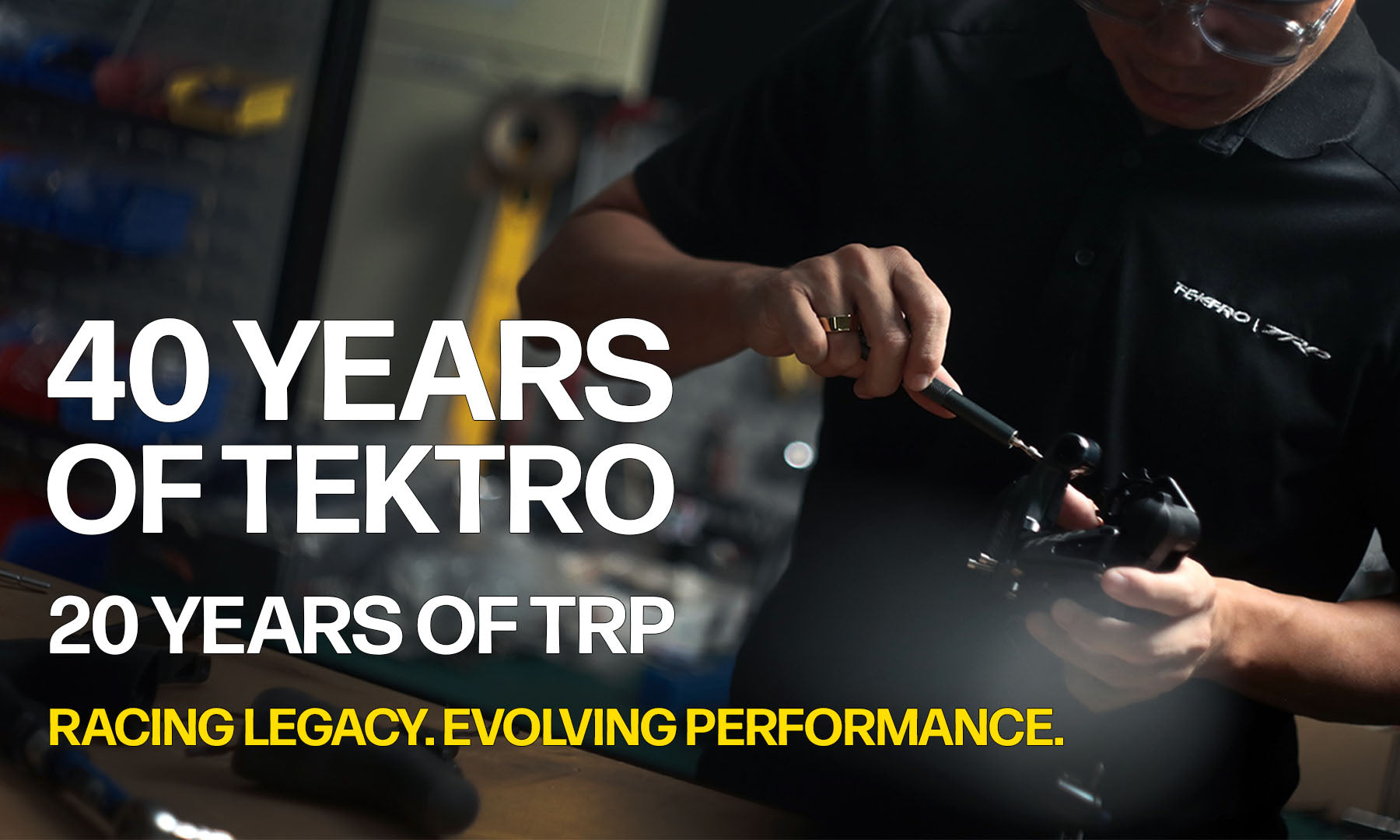
40 Years of Innovation. 20 years of racing.
On June 17, 1986, TEKTRO was founded in Changhua, Taiwan, by Gary Chen, Leo Chen, and Aver Tsai. The company started with just 20 employees in a factory roughly the size of a basketball court, producing cantilever bicycle brakes. What began as a bicycle brake manufacturer has grown over four decades into a global component company spanning braking, drivetrain, and emerging integrated technologies.
That evolution has been driven by a combination of manufacturing, engineering, innovation, and racing. From BMX and Cyclocross World Championships to Downhill, Enduro, and Cross-Country World Cup victories, competition has become one of the most important proving grounds for TRP technology.
In 2026, we celebrate two major milestones: 40 years of TEKTRO and 20 years of TRP.
1986 - 1996
Building the Foundation


June 17, 1986 — TEKTRO was founded.
TEKTRO began in Changhua, Taiwan, with a focus on bicycle braking systems. With a team of just 20 employees, the company's original factory had the capacity to produce approximately 50,000 cantilever brakes per month. The first decade was about building a foundation — developing manufacturing expertise, refining brake designs, and establishing the production capabilities necessary to consistently manufacture dependable bicycle components.
As bicycle technology evolved, TEKTRO evolved alongside it. Those early years established something that remains central to the company today: the ability to design, engineer, manufacture, test, and continually improve its own products.
The foundation was in place. The next decade would bring rapid changes to both TEKTRO and the bicycle industry.
1996- 2006
A changing bicycle industry


The Road to TRP
The late 1990s and early 2000s were a period of enormous technological change in cycling. Mountain biking was rapidly evolving. Suspension travel increased, bikes became faster and more capable, and disc brakes began changing expectations for braking power, control, and consistency. TEKTRO was changing with it.
In 1999, TEKTRO introduced the Gemini, its first hydraulic disc brake, marking an important transition toward the braking technology that would become central to the company's future. Manufacturing expanded as well. TEKTRO opened a factory in Shenzhen in 2000 and another production facility in Wuxi in 2002, while continuing to develop its capabilities in Taiwan. Products such as the M920 caliper and BX4 lever reflected TEKTRO's continued development during this era, while nearly two decades of brake manufacturing provided the engineering knowledge necessary to take the next step.
By 2006, TEKTRO had spent 20 years learning how to make better brakes. Now it was time to find out how far they could be pushed.
2006–2016
The Birth of TRP


June 20, 2006 — TRP (Tektro Racing Products) is launched.
TRP was created as TEKTRO's high-performance brand, taking decades of manufacturing and engineering experience and applying it directly to competition. Close collaboration between engineers, professional athletes, and teams became a key part of the TRP development process. From the beginning, racing was central to that mission.
BMX and the Olympic Stage
BMX became an important part of TRP's early competition program. In 2008, Donny Robinson won the UCI BMX Supercross World Championship and represented the United States at the Beijing Summer Olympics, where BMX made its Olympic debut. Just two years after TRP was launched, its products were already being tested on one of the biggest stages in cycling.
World Championships in Cyclocross
Cyclocross became another important proving ground. Mud, sand, cold, and constantly changing course conditions presented unique challenges for braking systems and gave TRP engineers another demanding environment in which to develop products.
In 2009, Marianne Vos won the UCI Cyclocross World Championship on TRP equipment. Three years later, Niels Albert captured the 2012 UCI Cyclocross World Championship, adding another rainbow jersey to TRP's growing racing history.
Expanding the Foundation
TEKTRO was also continuing to expand behind the scenes. A new Changhua factory began operation in 2009, followed by the opening of an R&D office in Taichung in 2015. By TRP's 10th anniversary, the brand had competed at the Olympics, earned World Championship titles, and established itself across multiple disciplines.
But 2016 would mark the beginning of a very different chapter.
2016-2026
a decade defined by racing


Aaron Gwin and the Beginning of G-Spec
In 2016, TRP signed Aaron Gwin, the world's #1-ranked downhill rider at the time. The relationship went much deeper than traditional sponsorship. Gwin became directly involved in product development, giving TRP engineers feedback from one of the fastest and most successful downhill racers in the world. That collaboration helped establish the G-Spec series — performance products developed with direct input from professional racers and designed around the extreme demands of World Cup competition.
The impact was immediate.
Gwin won the 2016 UCI Downhill World Cup Overall, delivering TRP its first Downhill World Cup Overall title.
Then he did it again.
In 2017, Gwin captured another UCI Downhill World Cup Overall title, further establishing TRP at the highest level of gravity racing. At the center of this era was one of the most important products in TRP history: the G-Spec Quadiem. The four-piston gravity brake gained significant popularity among downhill and enduro riders and helped introduce an entirely new generation of riders to TRP. Quadiem helped build the passionate fanbase that continues to follow the brand today.
From Quadiem to G-Spec DH
World Cup racing also exposed opportunities to improve. More power. Better heat management. Improved ergonomics. Greater consistency on increasingly fast bikes and demanding tracks. The G-Spec DH continued the evolution of TRP's gravity platform in 2018. That same year, Gwin won the opening UCI Downhill World Cup in Lošinj, Croatia, adding another victory to TRP's rapidly growing World Cup résumé. By 2019, development had progressed to the G-Spec DH-R, laying the groundwork for the next generation of TRP gravity brakes.
But something else was happening inside TRP.
After more than three decades of focusing primarily on brakes, the company was preparing to enter an entirely new category.
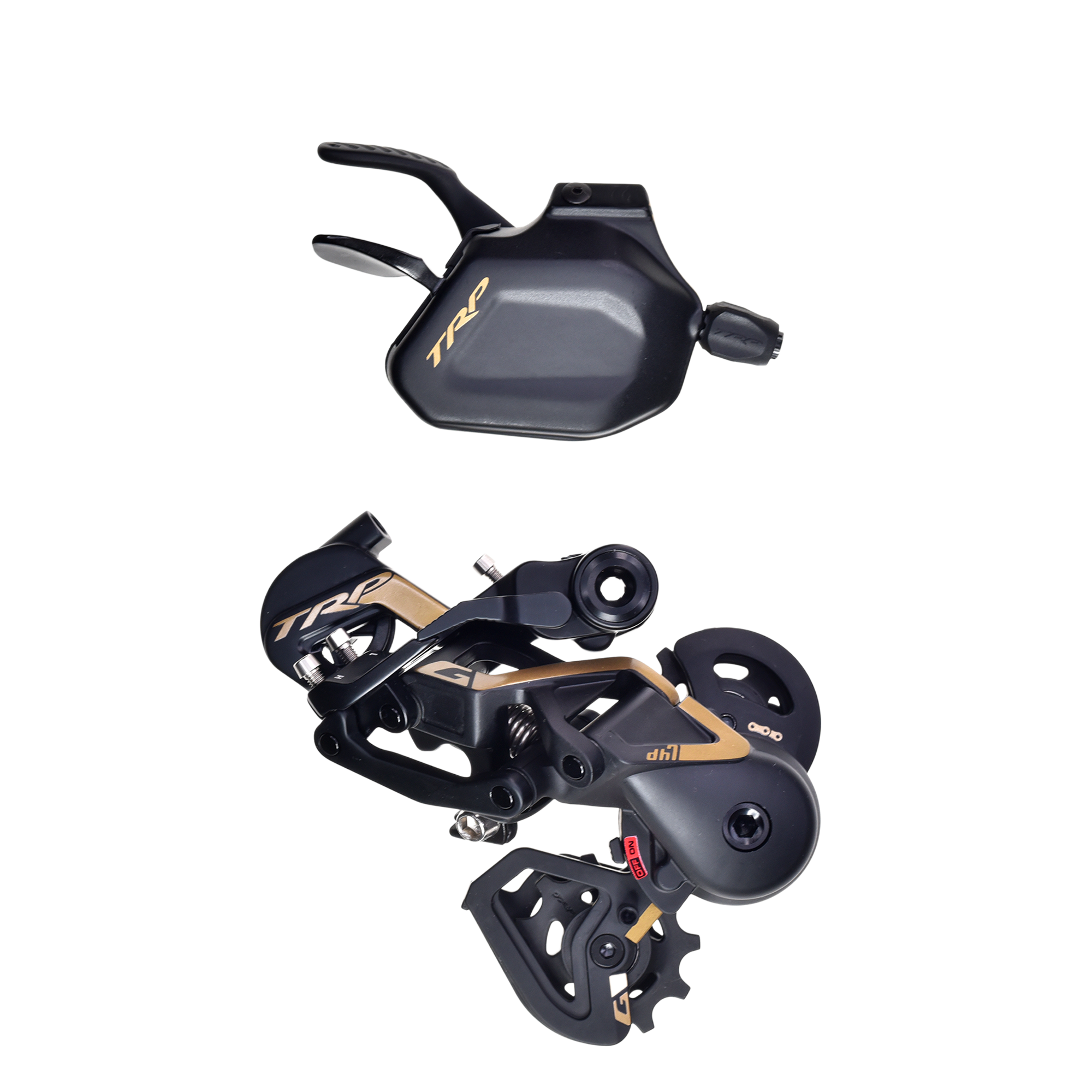
DH7 / TR12
Beyond Brakes
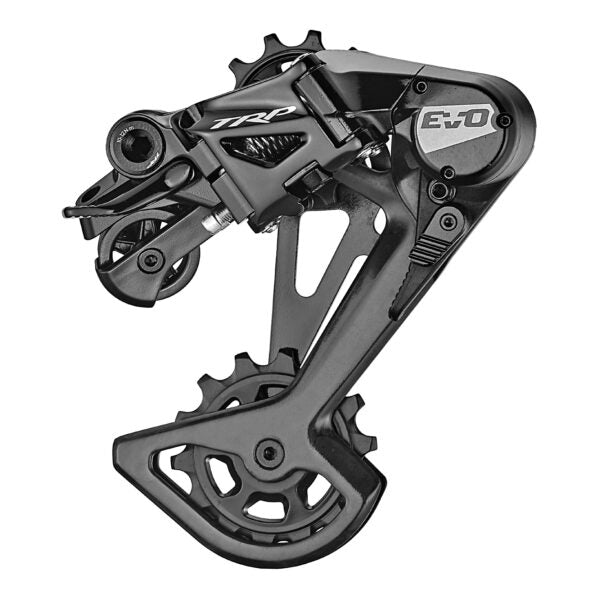
TRP engineers spent two years researching drivetrain technology and developing new concepts, intellectual property, and patents before officially entering the drivetrain category in 2019 with the DH7 and TR12. The launch marked a major expansion beyond braking and the beginning of a new chapter for TRP.
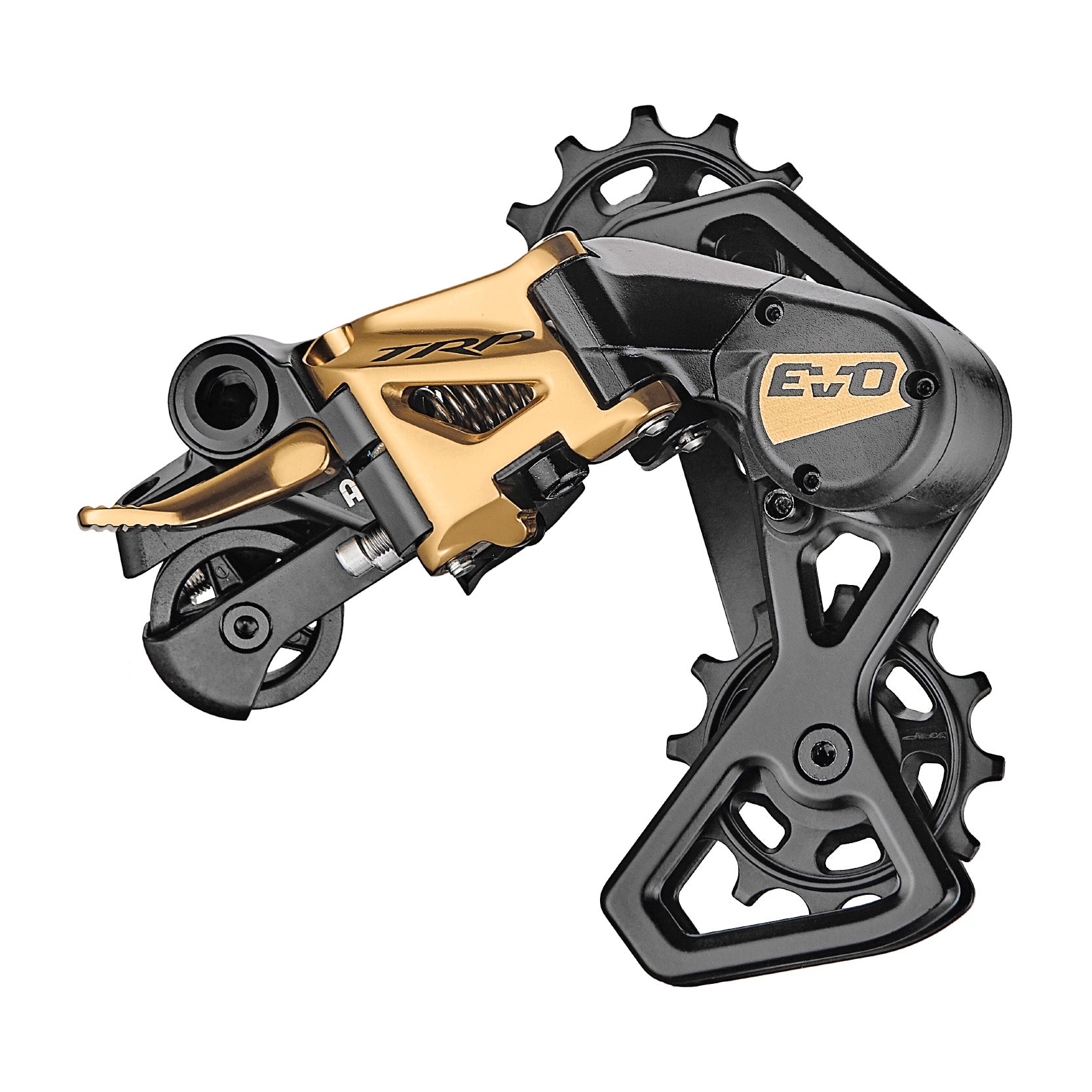
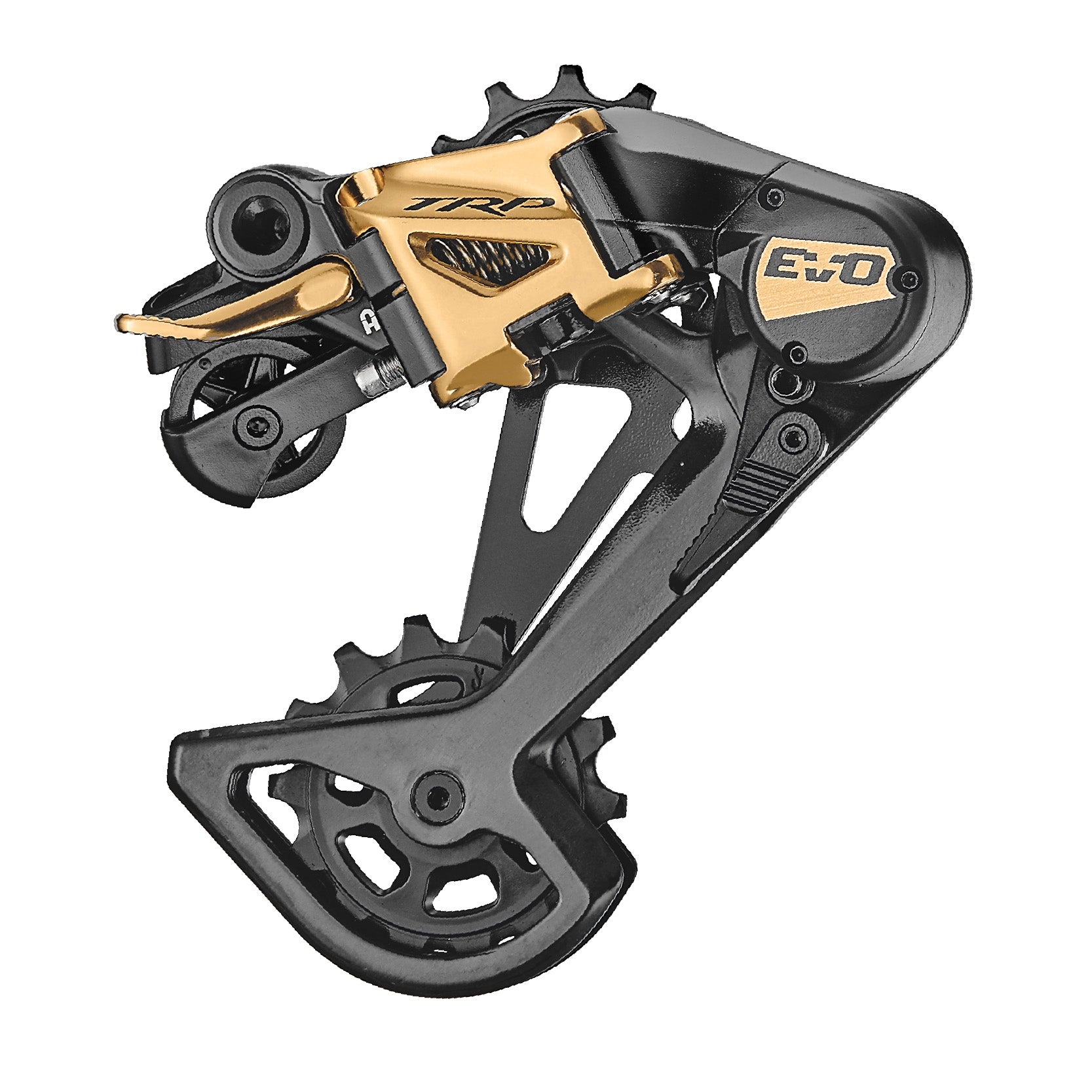
Developed for the demands of mountain biking, the DH7 drivetrain introduced the Hall Lock, created in collaboration with Aaron Gwin’s longtime mechanic, John Hall and Neko Mulally. The system stabilizes the derailleur at the mounting bolt, reducing unwanted movement and helping create a drivetrain capable of standing up to the demands of downhill racing while remaining one of the quietest on the market.
DH-R EVO: A NEW STANDARD FOR GRAVITY


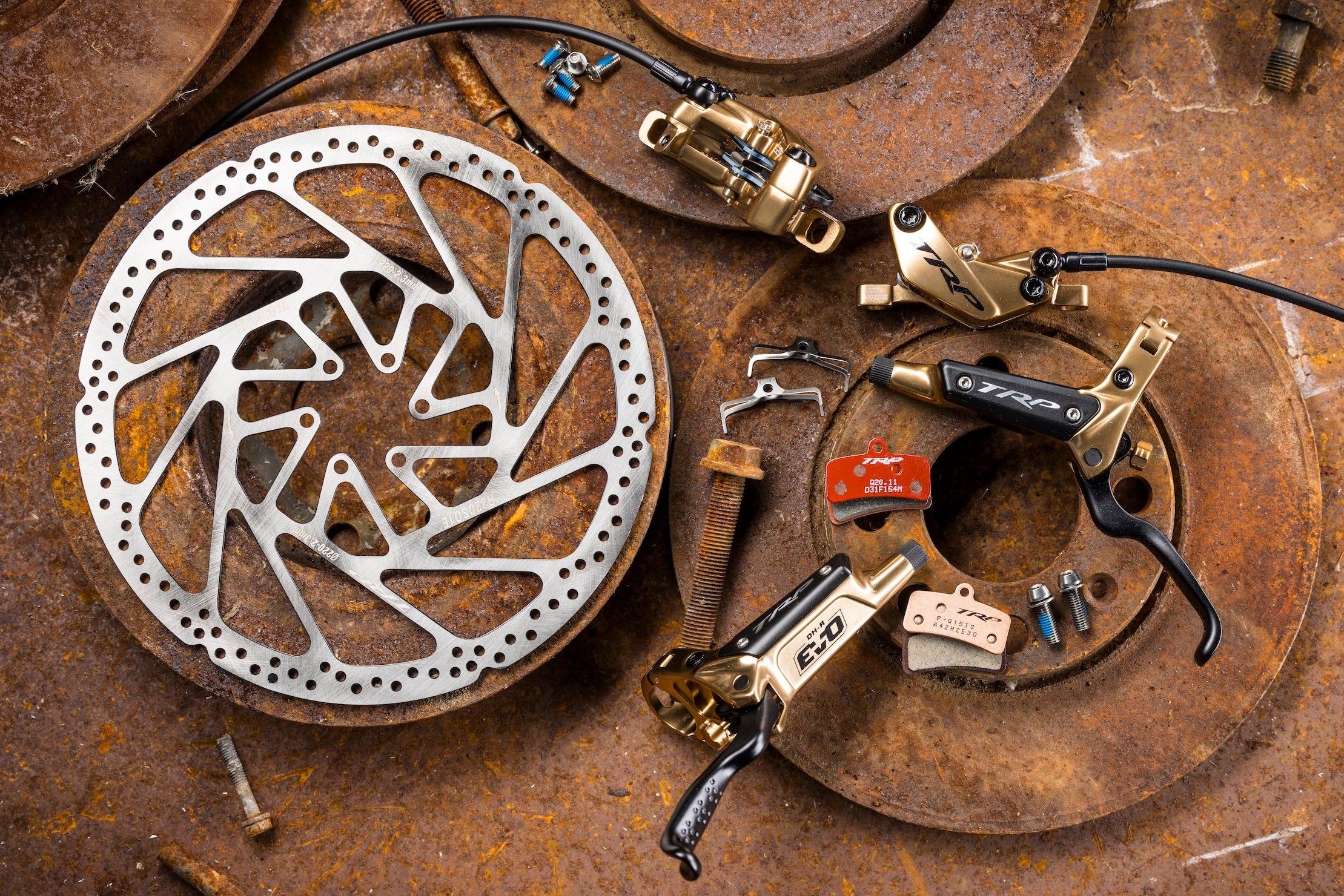

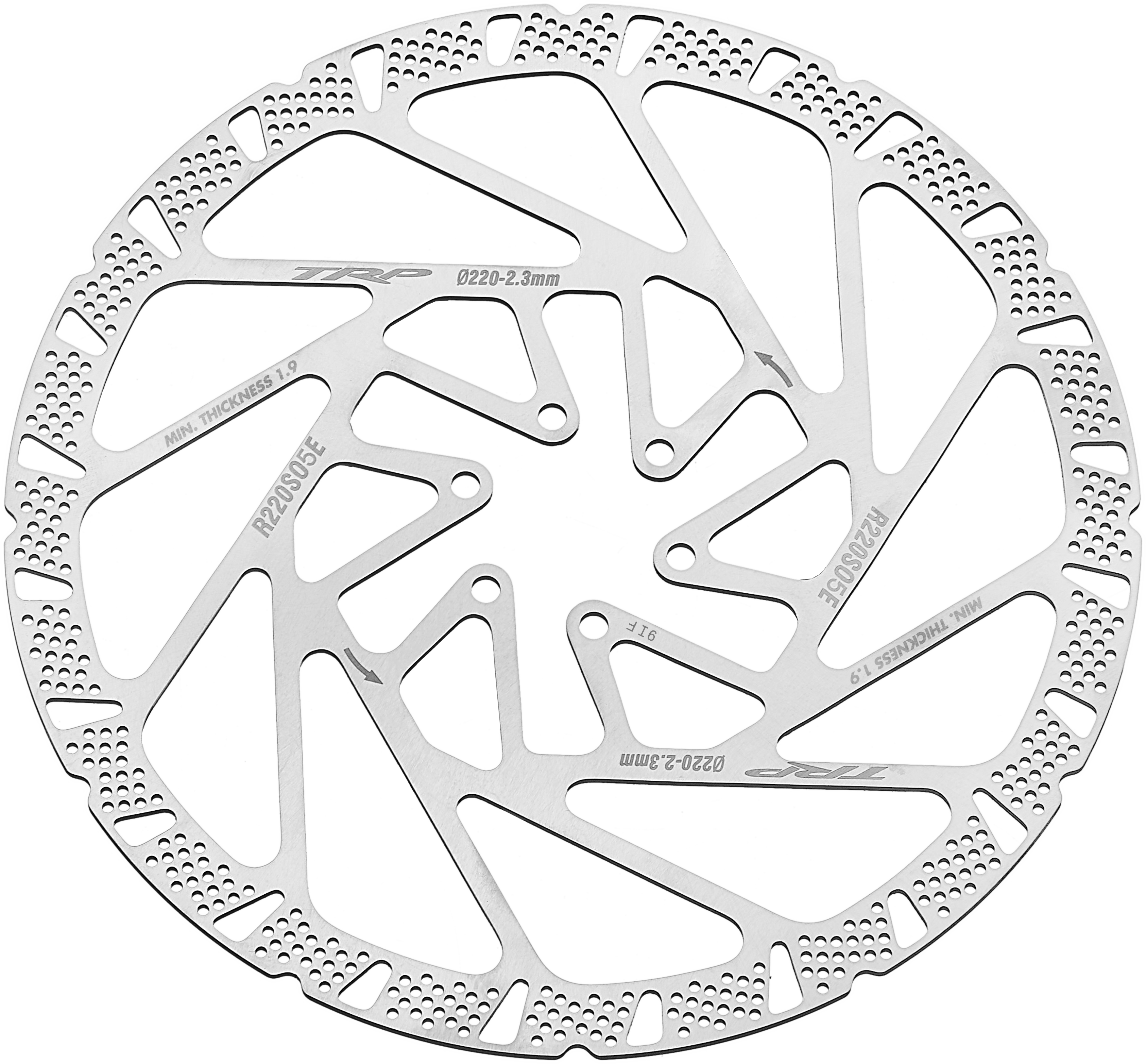
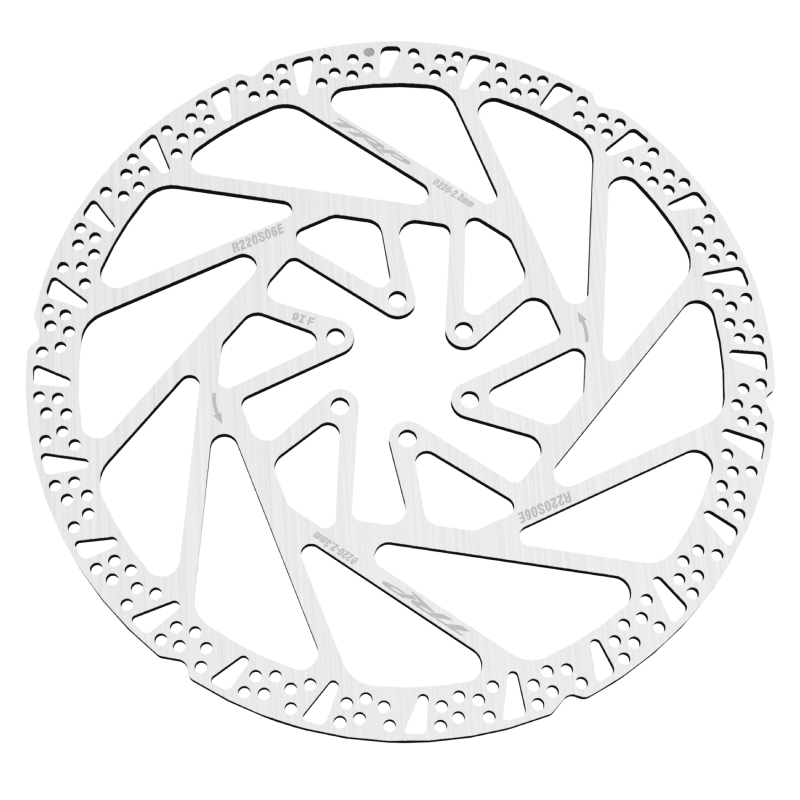
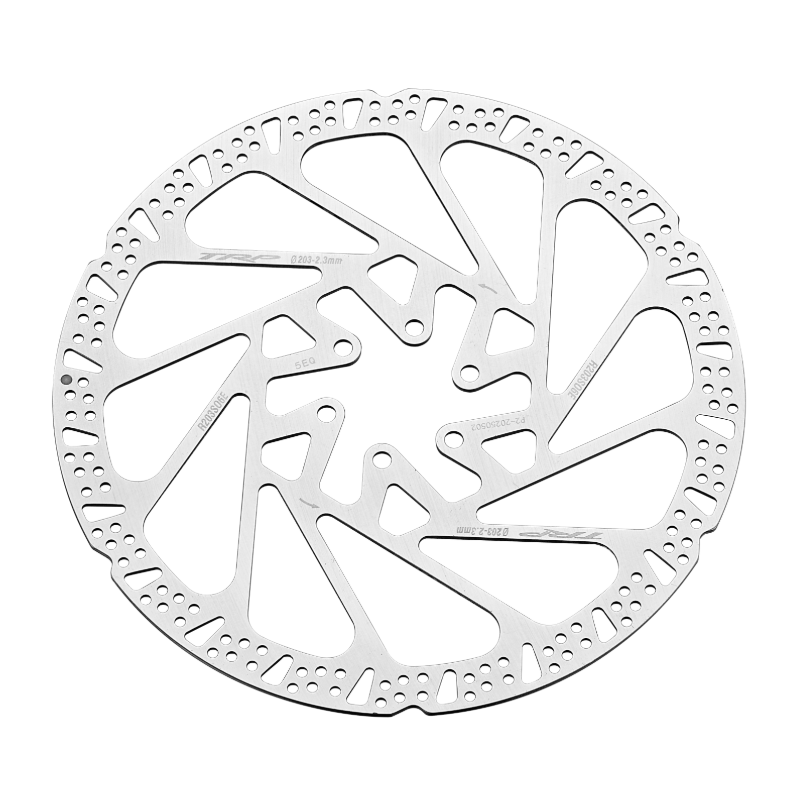
The story of DH-R EVO began in 2018, when Neko Mulally spotted a 2.3 mm TEKTRO rotor developed for e-MTB applications and asked if he could test it on his downhill bike. The thicker rotor was designed to handle the increased weight and braking demands of e-bikes, but Neko saw potential for the same technology in downhill. Testing showed advantages in heat management, stiffness, and consistency under the extreme demands of World Cup racing.
Working with Neko, Aaron Gwin, and other athletes and mechanics, TRP continued refining the concept. Years of lessons from Quadiem, G-Spec Quadiem and World Cup competition were brought together as engineers pursued more power, better heat management, and greater consistency for increasingly fast and capable gravity bikes.
In 2020, TRP introduced DHR-EVO and its 2.3 mm rotor system, representing a major evolution in the company's gravity technology. Built around the demands of downhill and enduro racing, DHR-EVO established the foundation for the next generation of TRP gravity brakes and the EVO platforms that followed.
More Riders. More Victories


THE EVO ERA
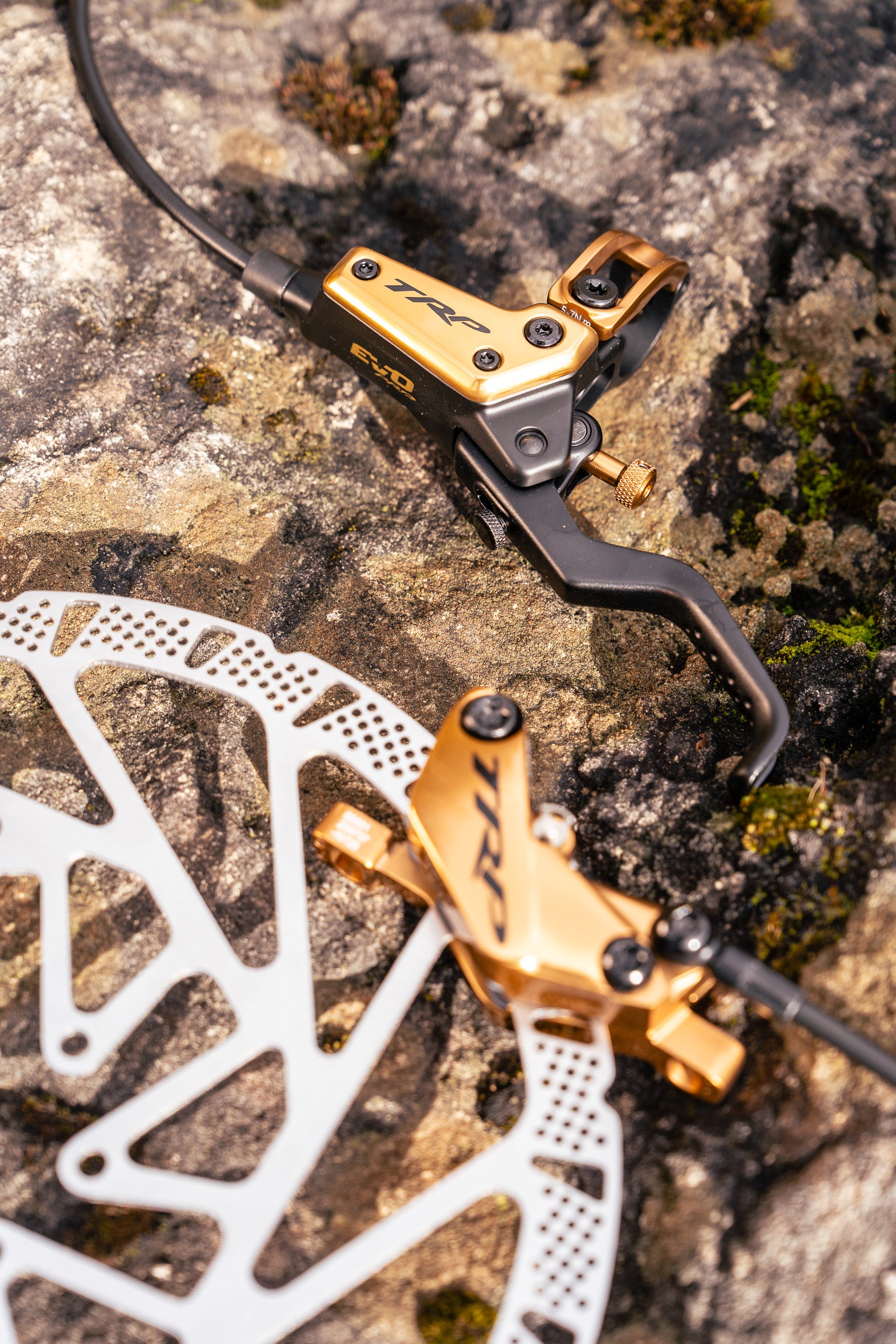


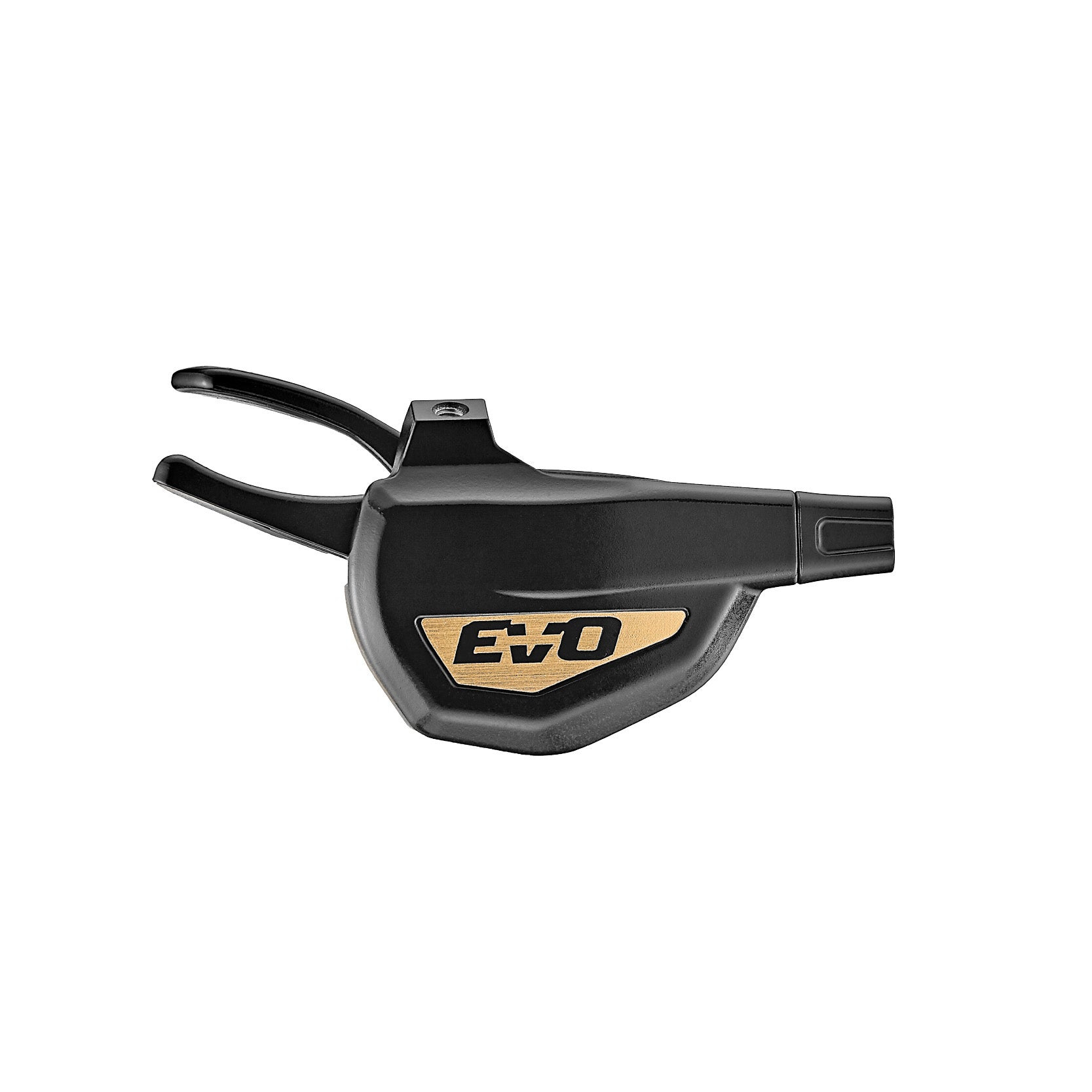
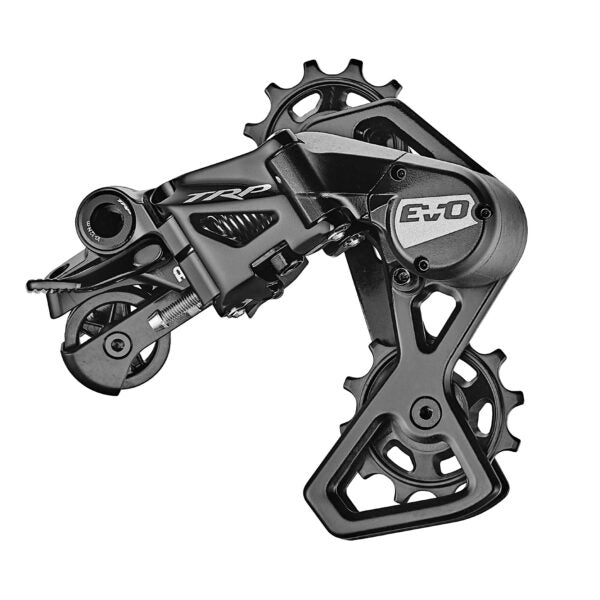
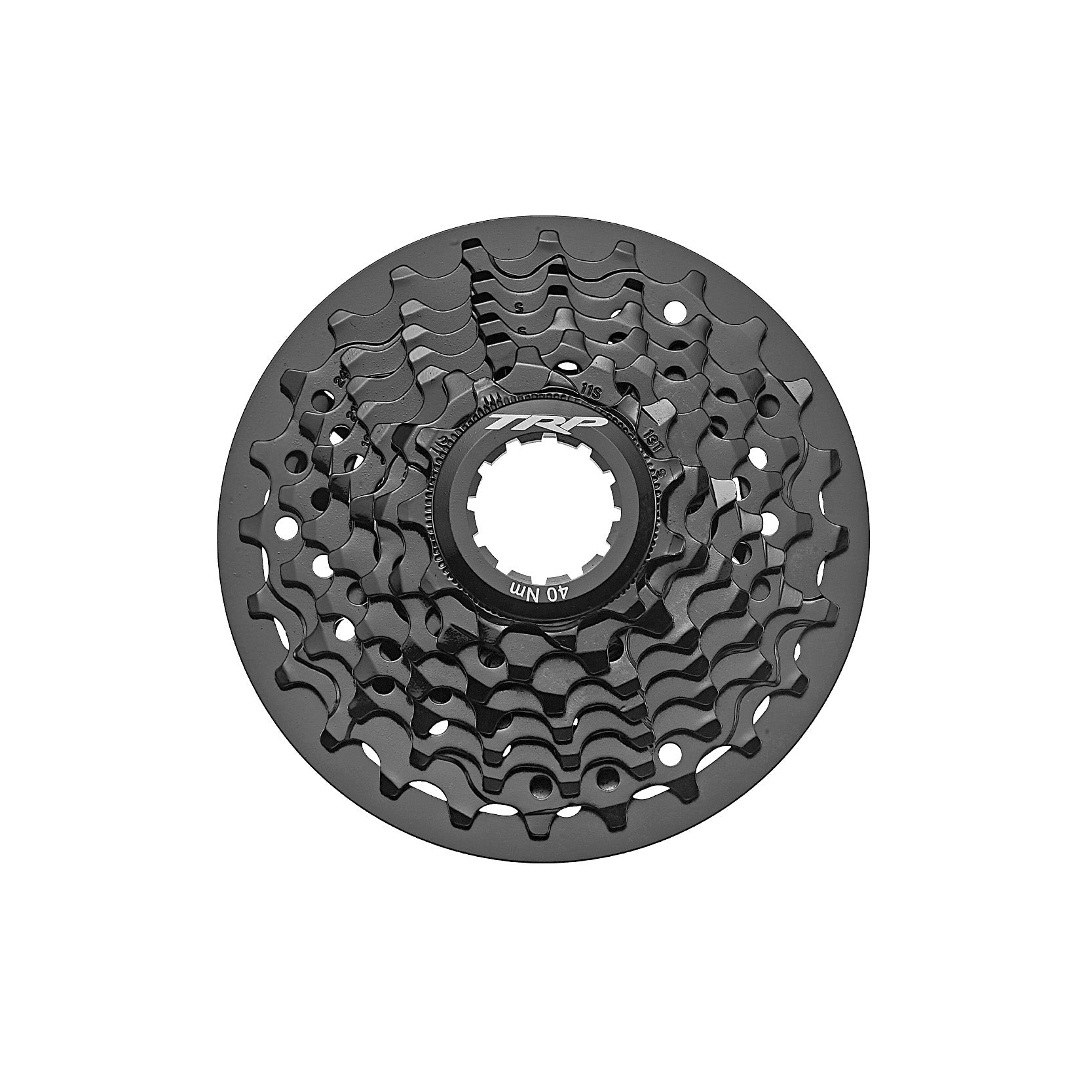
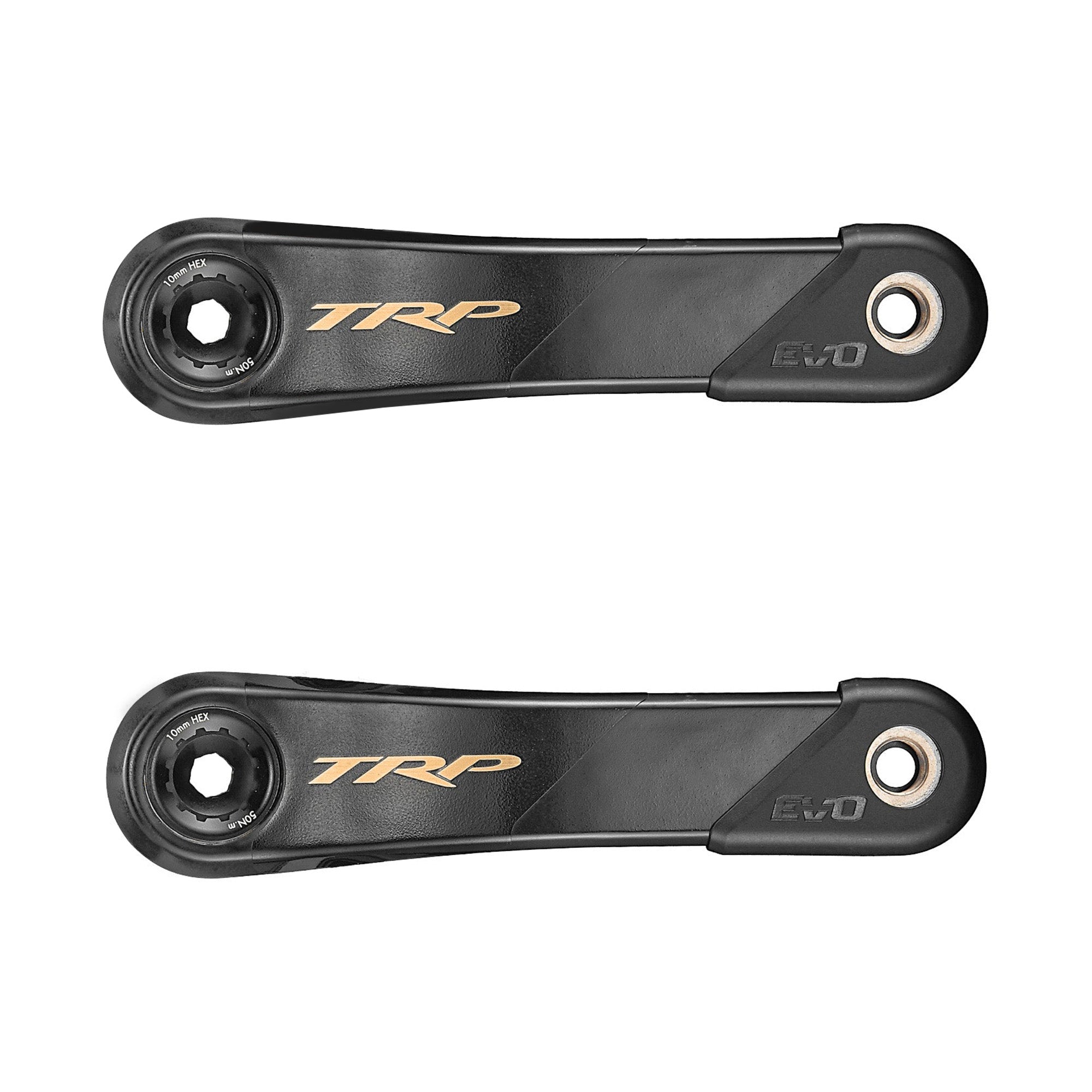
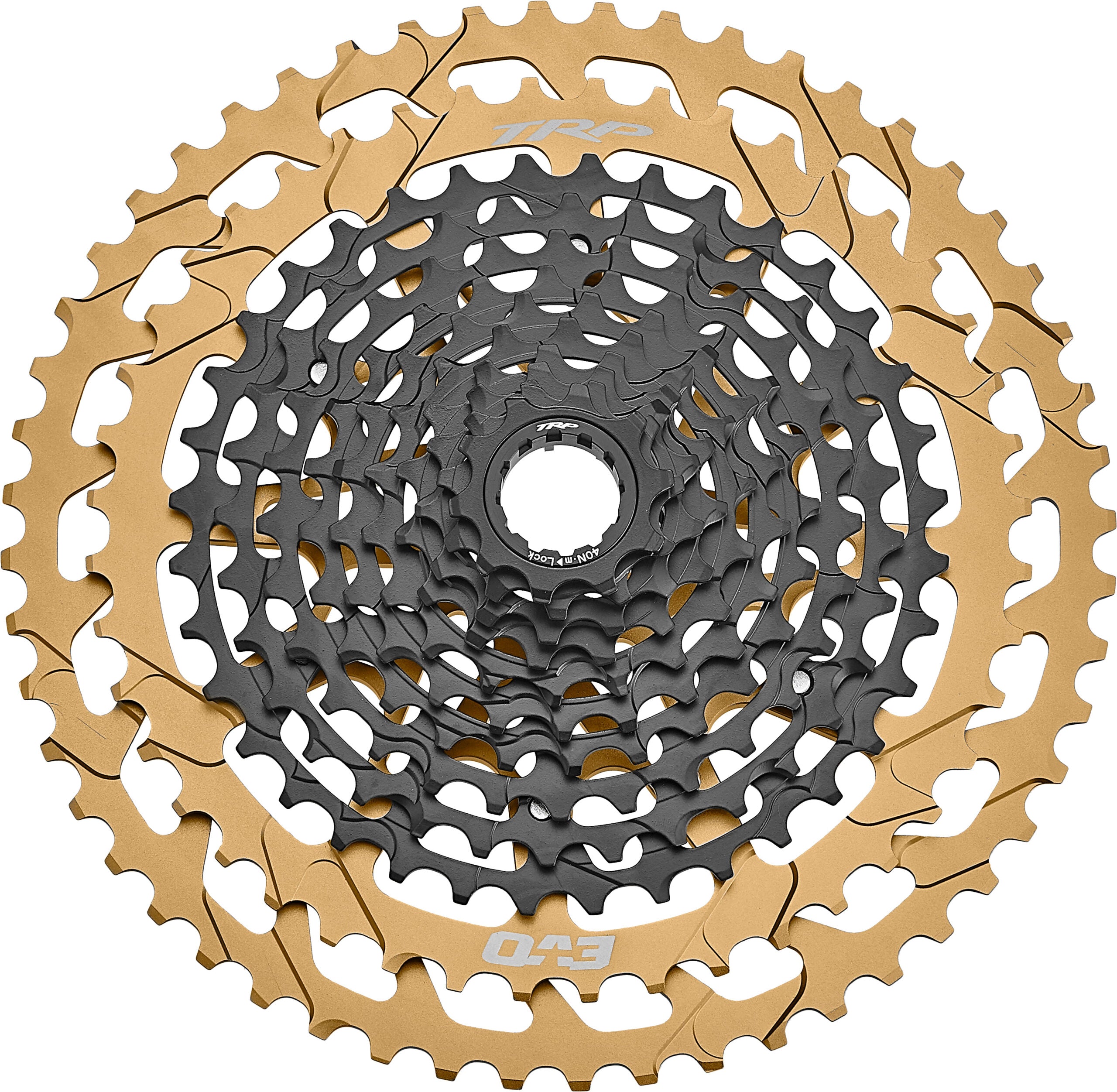
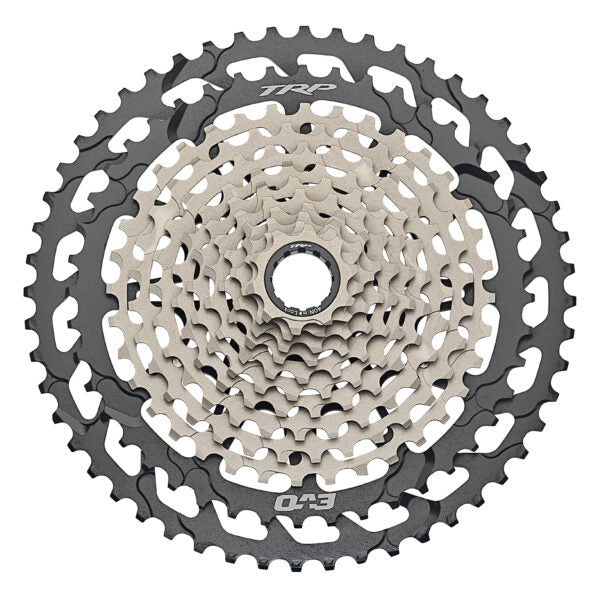
The EVO era brought TRP’s brake and drivetrain development together into a new generation of high-performance components. On the drivetrain side, EVO 7 and EVO 12 introduced the adjustable Hall Lock, Instant Silent Clutch, Cage Release, and Shift Mode Switch, creating quieter, more refined, and increasingly reliable shifting systems for everything from gravity racing to trail riding.
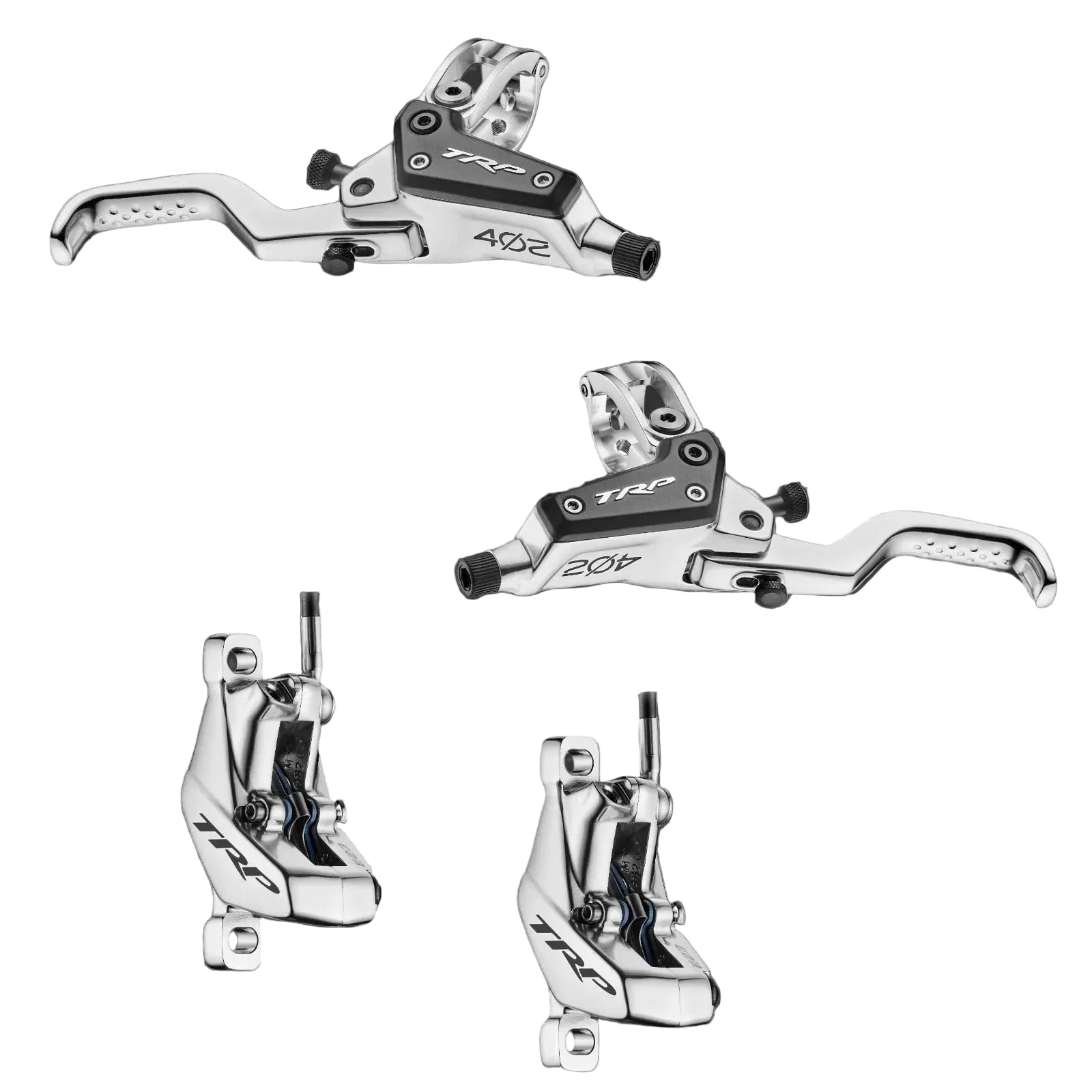
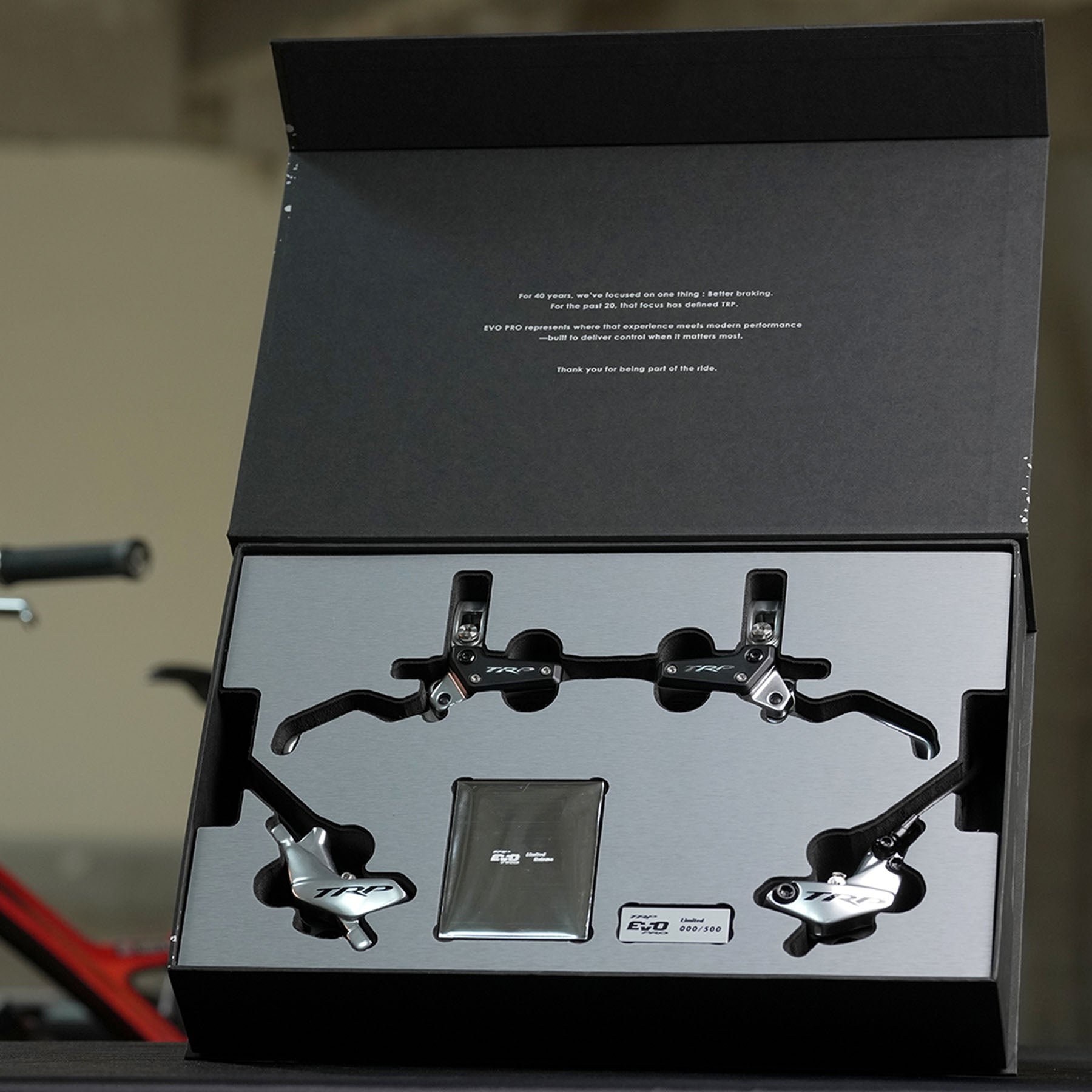
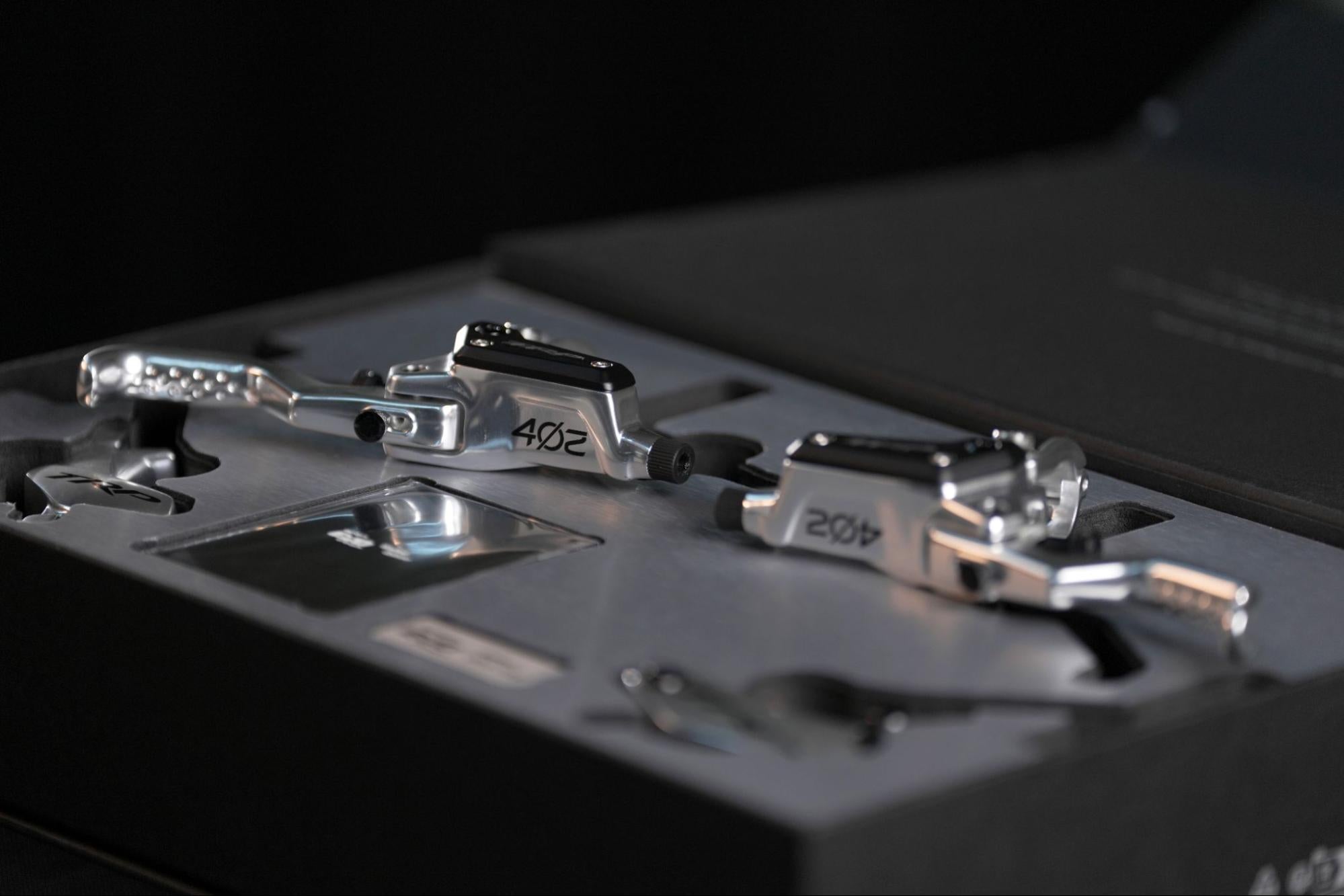
Braking took another major step forward with EVO PRO, combining the power and heat management developed through DHR-EVO with a new lever featuring tool-free reach and pad contact adjustment. The platform later expanded with EVO Expert and EVO Comp, delivering the same braking power across a broader lineup with different levels of adjustment and features. TRP also developed the RS05E 2.3 mm rotor, designed as part of the complete braking system to increase braking power by up to 10%.
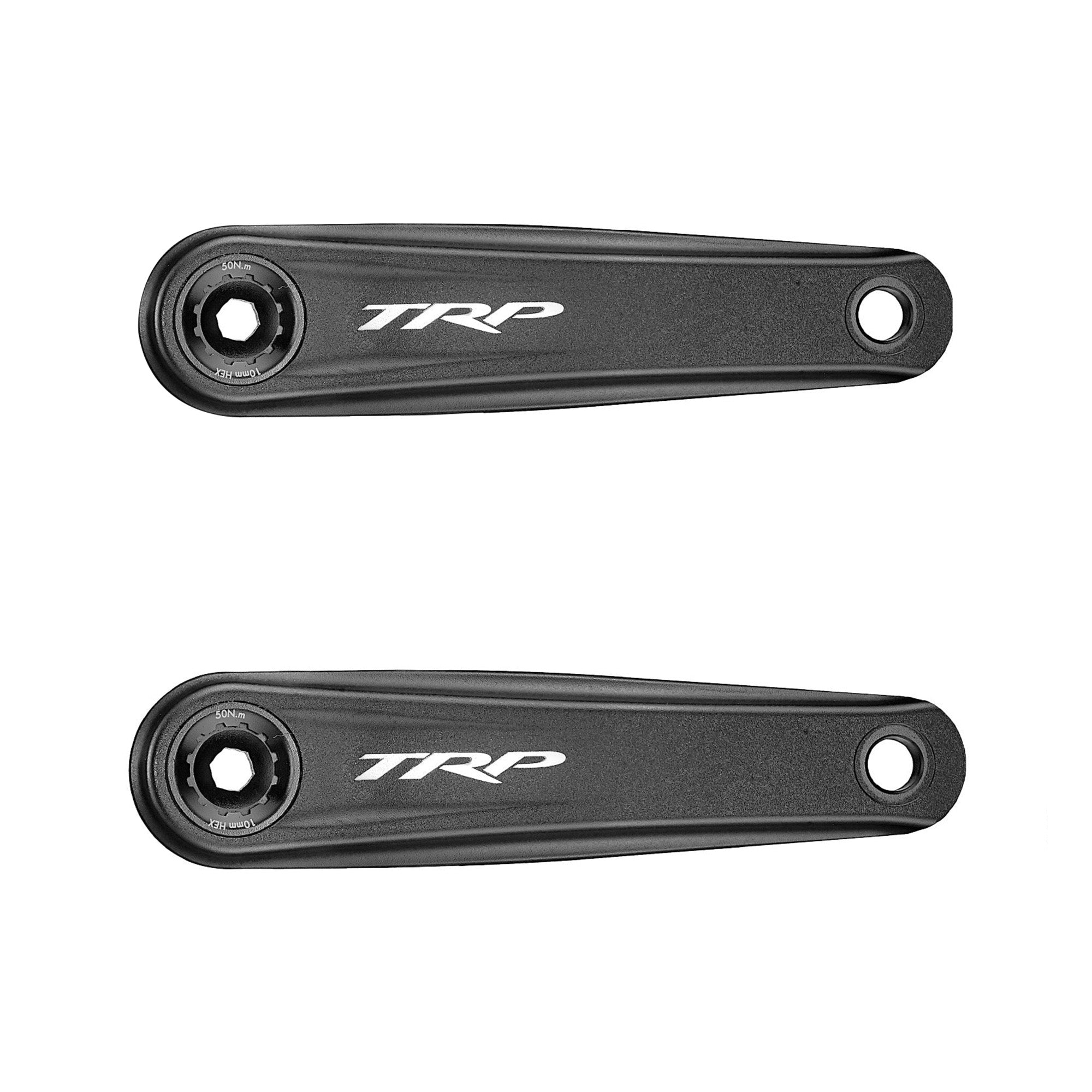
Together, the EVO generation represents decades of development coming together — brakes, rotors, and drivetrains engineered as complete systems and continually refined through racing.
2026: 40 Years of TEKTRO. 20 Years of TRP.


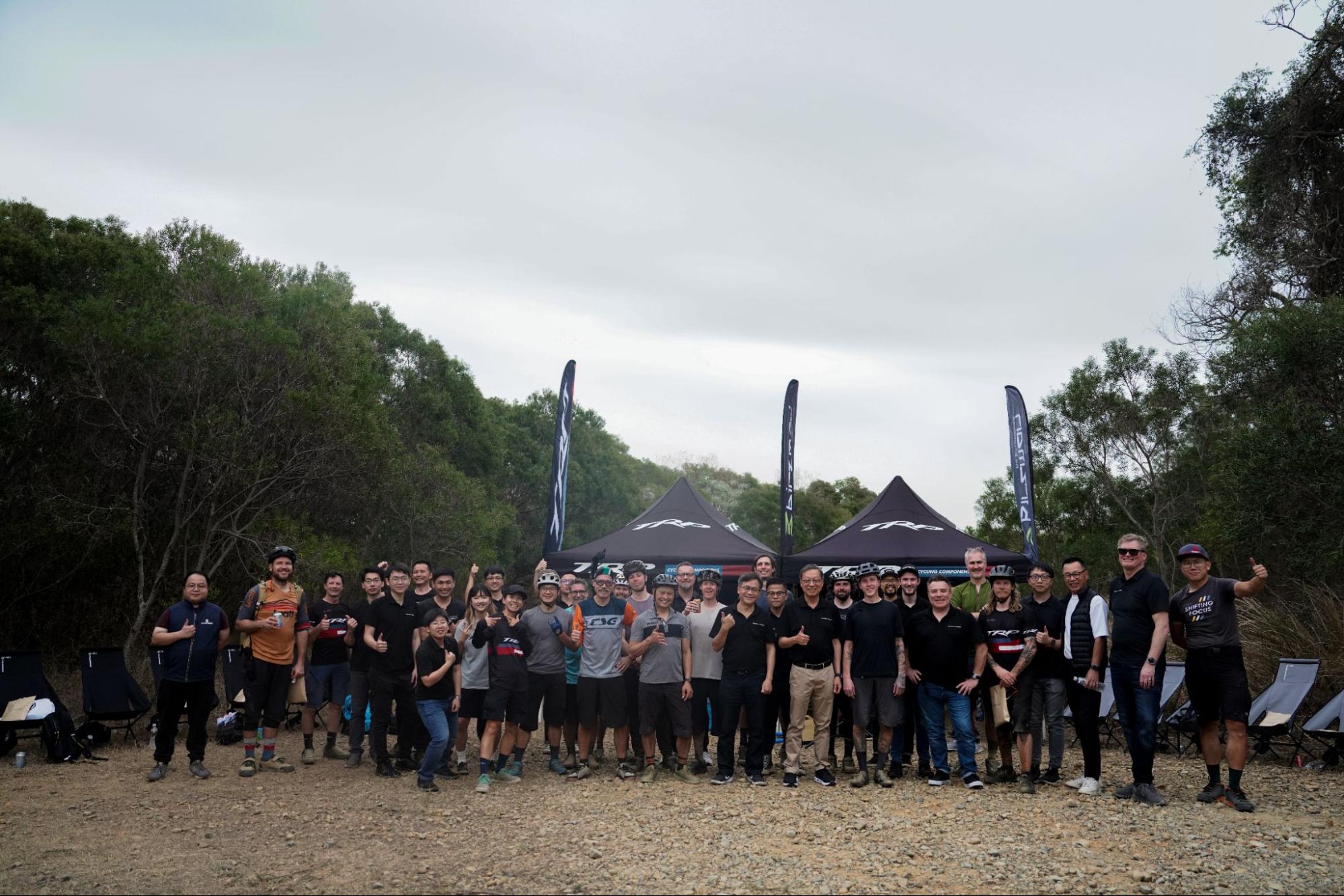
In 2026, TEKTRO celebrates 40 years and TRP celebrates its 20th anniversary — not simply by looking back, but with one of the most diverse and successful racing programs in the brand’s history.
TRP made a major new commitment to downhill as title sponsor of Frameworks Racing / TRP, with longtime TRP athlete Aaron Gwin joining Asa Vermette and Anna Newkirk under the Frameworks banner. The partnership also builds on TRP’s renewed development relationship with Neko Mulally and the Frameworks program, which began again in 2024 after several years apart. Together, the program strengthens TRP’s connection between World Cup racing, athlete feedback, and product development.
The results followed immediately. Vermette won his Elite World Cup debut in South Korea and added another Red Bull Hardline Tasmania victory, while Newkirk captured her first Elite World Cup win at Lenzerheide, becoming the first American woman in 23 years to win at the Elite level. TRP’s success extended well beyond downhill, with Mathis Azzaro earning two Cross-Country World Cup victories, Martina Berta adding another XC World Cup win, and Tristan Botteram taking an Enduro World Cup victory — putting TRP on top across downhill, cross-country, and enduro.
Downhill. Cross-Country. Enduro. Different athletes, different bikes, different demands — one development philosophy. Forty years after TEKTRO began and twenty years after TRP was created, racing remains one of the company’s most important proving grounds, connecting four decades of engineering and manufacturing with the products and athletes pushing toward what comes next.
Race-Proven Performance. Built for Your Bike.